
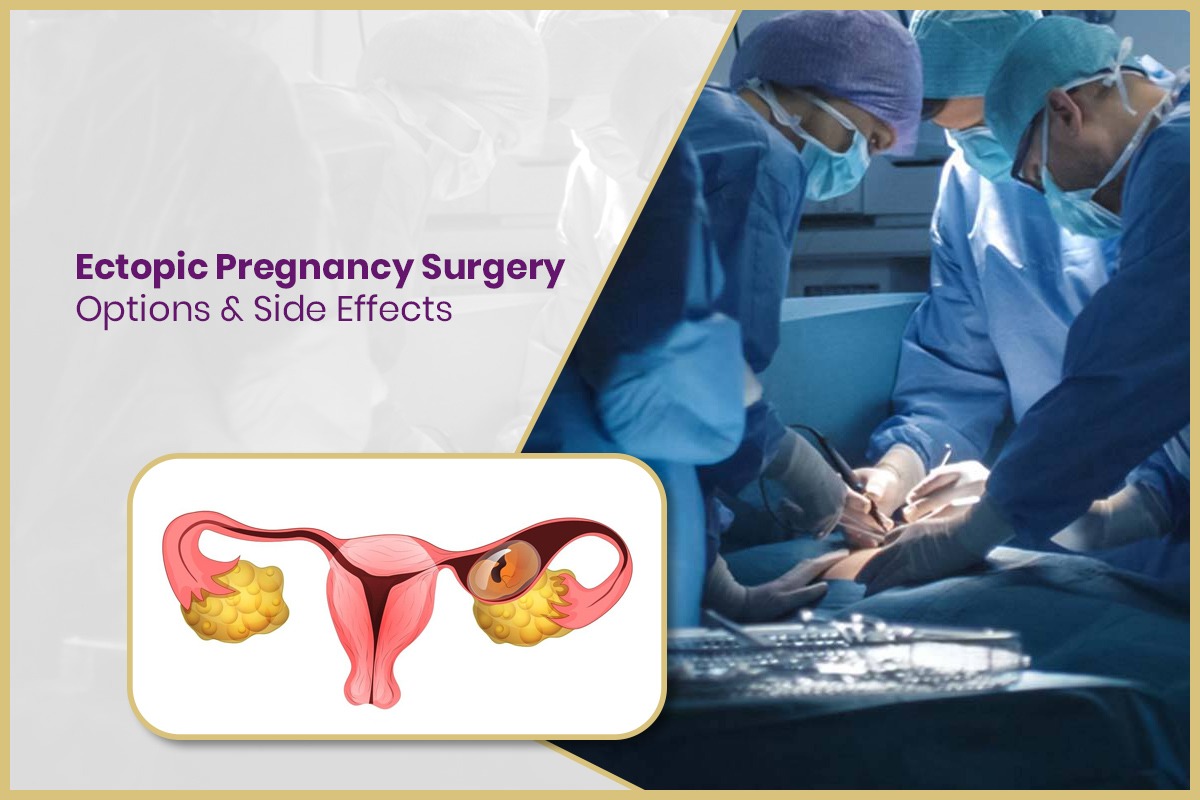
What is Ectopic Pregnancy? Causes, Symptoms, & Ectopic Pregnancy Surgery

An ectopic pregnancy is a rare but serious condition where a fertilized egg implants outside the uterus, most commonly in a fallopian tube. It occurs in only 1-2% of all pregnancies. While rare, it requires urgent medical attention and can be fatal if left untreated. Fortunately, if caught in time, an ectopic pregnancy can be medically terminated through medication or ectopic pregnancy surgery.
How to Detect Ectopic Pregnancy: Symptoms and Signs

An ectopic pregnancy occurs in the fallopian tube in about 90% of cases. It can also develop in the abdominal cavity, ovaries, or cervix.
Detecting an ectopic pregnancy early can greatly increase your chances of minimising internal damage and preventing damage to your fallopian tubes, ovaries, and uterus. You may wonder, ‘How to terminate ectopic pregnancy early?’ It’s possible: just watch out for the symptoms of ectopic pregnancy.
At first, an ectopic pregnancy can appear like a normal one. With time, the following symptoms may surface:
- Bleeding
- Fatigue, dizziness, and weakness
- Sharp, stabbing lower abdominal pain
- Low blood pressure
- Shoulder pain
- Fainting
It’s important to consult your doctor if you suspect an ectopic pregnancy or experience any tubal pregnancy symptoms. Healthcare professionals can identify an ectopic pregnancy by conducting a pelvic ultrasound and a beta hCG pregnancy test.
An ectopic pregnancy is a medical emergency that requires immediate medical attention. If left untreated, your fallopian tube can rupture, which can cause internal bleeding and even death.
Medical Treatment: Methotrexate

If an ectopic pregnancy is discovered early, before a fallopian tube ruptures, it can be treated without ectopic pregnancy surgery. In this case, doctors will administer a medication called methotrexate, which works by stopping cell growth and preventing the pregnancy from progressing further.
You will be given a single injection of methotrexate in your buttocks, after which doctors will closely monitor your condition to check the status of the pregnancy. You will also have to attend several doctor’s appointments and take blood tests to confirm that the pregnancy has been terminated.
Methotrexate can have several side effects, such as:
- Mild abdominal pain
- Dizziness
- Diarrhoea
- Feeling sick
You will also be asked to use contraception for at least 3 months after taking methotrexate, as it can be harmful for the baby if you get pregnant during this time. Avoid alcohol for 3 months as well, as consuming it after methotrexate treatment can cause liver damage.
Occasionally, a second dose of methotrexate may be required. If medication doesn’t work, ectopic pregnancy surgery is the next best treatment for ectopic pregnancy.
Surgical Treatment Options: Ectopic Pregnancy Surgery at Bloom IVF

Doctors may decide on surgical management of ectopic pregnancy in the majority of cases. The exact procedure used will depend on several factors, such as where the egg has implanted, the amount of bleeding and damage to the organs, etc.
Laparoscopic Surgery
When medication is no longer an option, ectopic pregnancy surgery, such as laparoscopic procedures (keyhole surgery) may be required. It is usually the preferred form of treatment when the fallopian tube has ruptured or is at risk of rupturing.
Laparoscopic procedures involve making a small incision on your lower abdomen, through which a thin tube with a camera (laparoscope) is inserted. The laparoscope allows our doctors to see into the abdomen and remove the ectopic pregnancy through several small incisions.
In a laparoscopy, you will be administered anaesthesia and will not feel any pain during the process. Tubal pregnancy surgery, or surgical management for ectopic pregnancy, typically involves laparoscopic procedures like salpingostomy or salpingectomy.
Salpingectomy
In a salpingectomy, both the fallopian tube and the ectopic pregnancy are removed. This helps prevent future complications during pregnancy.
Removing the fallopian tube containing the pregnancy is the most effective path of treatment. Don’t worry; you can still become pregnant after a salpingectomy as long as your other fallopian tube is healthy and intact.
Our doctors will discuss all possible treatment options with you beforehand and remove the fallopian tube only after you give consent.
Salpingostomy
If your other fallopian tube is not healthy/present, and you want to get pregnant again, our doctors will try to remove the egg without damaging the tube through a procedure called salpingostomy.
In this procedure, a small incision is made in the fallopian tube, and the ectopic pregnancy is removed while leaving the tube intact. This sophisticated procedure is performed with the utmost safety and care at Bloom IVF clinics across India.
Laparotomy
While several small incisions are made in laparoscopic surgeries, a laparotomy involves making a larger cut on the abdomen. It is used in severe cases of tubal pregnancy, usually when a laparoscopic ectopic pregnancy surgery is not possible.
Recovery and Side Effects After Ectopic Pregnancy Surgery

Recovering from ectopic pregnancy surgery can depend on the type of procedure and the patient’s health. After surgery, following your doctor’s instructions and taking any prescribed medications as directed is paramount.
You may experience side effects like bleeding and abdominal pain after ectopic pregnancy surgery. Get enough rest, eat and sleep well, and avoid any strenuous activities while recovering.
Most women take approximately 4 to 6 weeks to completely recover from the ectopic pregnancy surgery. Your Bloom IVF care team will stay in touch with you even during your recovery period and will answer any questions or doubts you have.
What Can Cause an Ectopic Pregnancy?
Ectopic pregnancy occurs sometime between the 4th and 12th weeks of pregnancy, usually due to certain conditions that are slowing down or blocking the natural path of the eggs. So, instead of travelling to the uterus, the fertilised egg gets stuck in the fallopian tube and begins developing into a foetus there.
Occasionally, the body naturally terminates such pregnancies by itself, but in other cases, medical termination is required. Unlike your uterus, your fallopian tube cannot stretch to accommodate a growing foetus. During an ectopic pregnancy, the foetus has no chance of surviving and needs to be removed or terminated.
Some of the causes of ectopic pregnancy are:
- Scar tissue due to endometriosis or pelvic surgery
- Pelvic inflammatory disease (PID)
- Previous fallopian tube surgery
- Damaged fallopian tubes from STDs or STIs
- Irregularly-shaped fallopian tubes
- Becoming pregnant while using an IUD
- Smoking
- Pregnancy through IVF
- Having an ectopic pregnancy in the past
Can I Get Pregnant After an Ectopic Pregnancy?

Yes, women who undergo ectopic pregnancy surgery can go on to have successful, healthy pregnancies, even if one of their fallopian tubes has been removed.
Most women are born with two healthy fallopian tubes. You can still get pregnant if you have one ovary and one fallopian tube left after an ectopic pregnancy.
If both your fallopian tubes have been damaged or removed, pregnancy is still possible through in vitro fertilisation (IVF). In this fertility procedure, eggs are retrieved from the ovaries and placed in the uterus after fertilisation, bypassing the need to travel through the fallopian tubes.
Bloom IVF has helped many women become pregnant after ectopic pregnancy surgery, even if they have lost one or both of their fallopian tubes. Our team is dedicated to providing safe and affordable reproductive healthcare to all so that everyone is able to achieve their dream of parenthood with Bloom IVF.
Pregnancy After Ectopic Pregnancy: A Possibility

If you’re trying to get pregnant after having had an ectopic pregnancy surgery, remain in touch with your fertility clinic and ensure that your doctor monitors you during different stages of the pregnancy. We recommend doing early blood tests and ultrasound testing to check if an ectopic pregnancy is developing.
Get in touch with a fertility specialist at Bloom IVF to maximise your chances of healthy conception after an ectopic pregnancy. Book a free consultation today.
Frequently Asked Questions
Can I prevent an ectopic pregnancy from happening?
No, you can’t really prevent an ectopic pregnancy, but you can take steps to reduce the risk. These include maintaining a healthy weight, not contracting any sexually transmitted infections (STIs), and not smoking.
How to remove an ectopic pregnancy at 8 weeks?
At 8 weeks, an ectopic pregnancy can be removed through medical management with methotrexate or with surgery, depending on how much the pregnancy has progressed and if a fallopian tube has ruptured.
How long should I wait after an ectopic pregnancy to try getting pregnant again?
Most fertility specialists recommend waiting for at least 3 months before trying to get pregnant again, as the fallopian tubes might not have healed yet. Waiting also reduces the risk of another ectopic pregnancy.
Can my pregnancy continue after an ectopic pregnancy?
Unfortunately, no. Ectopic pregnancies are life-threatening if untreated, as the embryo cannot survive outside the uterus.