
Teratozoospermia: Causes, Types, Diagnosis & Treatment Options

Teratozoospermia is a condition in which male sperm cells are abnormally shaped. It can make natural conception harder and sometimes even cause infertility in men. In this blog, we discuss what teratozoospermia is and its causes, types, diagnosis, and treatment options.
What is Teratozoospermia?
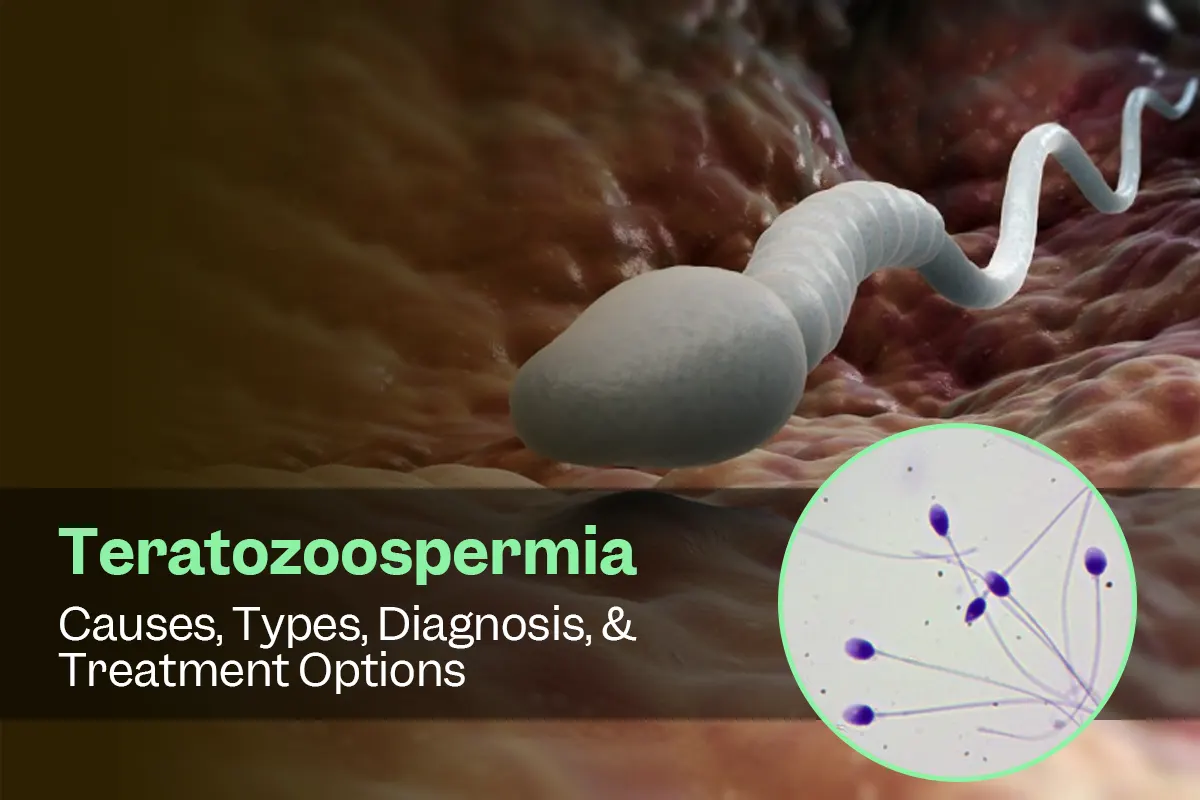
Teratozoospermia is a condition where most of a man’s sperm are abnormally shaped. According to the World Health Organization, it’s diagnosed when less than 4% of the sperm in a semen sample have a normal shape. Morphologically normal sperm have a single head, midpiece and tail. Abnormal sperm may have two heads or two tails, thicker or thinner heads, deformed midpiece, or other structural issues that may prevent them from successfully fertilizing an egg.
How Common Is Teratozoospermia?
On its own, teratozoospermia will rarely cause infertility. Teratozoospermia is a very common condition and can even affect fertile men. Individuals who have teratozoospermia with other sperm parameters being normal can conceive naturally. However, if other parameters are abnormal as well, conceiving naturally may become more difficult.
Having a family history of teratozoospermia or certain medical conditions like diabetes can make you more likely to face teratozoospermia. Exposure to environmental toxins can also increase the risk of this condition. If you have been trying to conceive for over a year without success, consider getting fertility testing done for you and your partner.
Causes of Teratozoospermia
There are several causes behind teratozoospermia. While its impact on fertility isn’t well-defined, scientists believe that even fertile men may have it. Teratozoospermia can be caused by the following reasons:
Lifestyle Choices
Certain lifestyle habits like smoking and alcohol consumption can harm fertility by increasing the risk of abnormal sperm morphology and DNA fragmentation. Certain habits, like keeping your laptop on your lap or taking hot baths frequently, can raise your testicular temperature and also impact sperm quality.
Hormonal Imbalances
Teratozoospermia can be caused by hormonal imbalances, especially in testosterone. Hormonal therapy may help solve this issue.
Varicocele
A varicocele is an enlargement or swelling of the veins within the scrotum. It may increase scrotal temperature, impact sperm production, and also affect sperm morphology negatively.
Infection or Injury
Infections or injuries in the reproductive tract or sexually transmitted diseases can harm sperm parameters.
Cryptorchidism
Cryptorchidism is when one or both of the testicles have not descended into the scrotum. It can cause teratozoospermia.
Oligo Teratozoospermia
Oligo teratozoospermia is a condition in which a man has a low sperm count and abnormal sperm morphology. Fertility treatment may be recommended if the patient wants to have children.
Astheno Teratozoospermia
When someone has poor sperm motility (asthenozoospermia) and poor sperm morphology, it is called astheno teratozoospermia. This condition can be treated through lifestyle changes, but ART techniques may be necessary in certain cases.
Diagnosis of Teratozoospermia
Since teratozoospermia doesn’t have any symptoms, the only way to detect it is through a semen analysis. A sperm morphology test can check the percentage of normal morphology in your semen. Sometimes, multiple tests may be needed to verify the accuracy of your teratozoospermia diagnosis.
Speak to a fertility specialist if you have been diagnosed with teratozoospermia. They may conduct certain tests and take your medical history into account to identify the cause of your teratozoospermia and how to treat it. If left undiagnosed and untreated, it can become harder to deal with in the future.
Sperm Morphology Analysis
Semen analysis is the first test to diagnose abnormal sperm morphology. In this examination, the size, shape, and movement of the sperm are observed under a microscope to identify any abnormal sperm parameters. The technician is able to identify structural problems and conclude if the patient has teratozoospermia based on the WHO’s criteria.
Genetic Testing
Sometimes your fertility specialist may recommend a genetic assessment to check if you have any congenital abnormalities that may cause teratozoospermia. This is more common in severe cases. Identifying the reason behind the condition can help your fertility specialist recommend the right fertility treatment for you.
Hormonal Testing
Hormonal testing is not the same as genetic testing. In this method, hormonal profiling is used to diagnose any issues that might be causing poor sperm morphology. Hormones like testosterone, luteinizing hormone (LH), and follicle-stimulating hormone (FSH) are necessary for the process of sperm production, and an imbalance in these hormones can harm sperm quality and reproductive health.
Treatment options
Treating teratozoospermia may be easy or difficult depending on its underlying cause. Fertility clinics like Bloom IVF can help you diagnose the cause of your teratozoospermia and correctly identify the most effective treatment option for you.
Lifestyle Changes
If teratozoospermia is caused by unhealthy lifestyle habits, reversing these habits may reduce its negative effects. Quitting smoking and drinking, exercising regularly, and following a balanced diet can help improve your reproductive health and enhance your fertility potential.
Medications
Your specialist may recommend certain medications to treat the cause of your teratozoospermia. Certain fertility drugs, like hormonal therapy, can increase sperm production and sperm quality.
Supplements
Taking certain supplements can boost reproductive health. Omega-3 fatty acids, antioxidants, L-Carnitine, and vitamin E can improve your sperm parameters. Always consult your doctor or fertility specialist before starting any medication or supplements.
Surgery
Sometimes, teratozoospermia may be caused by varicoceles. Surgery can help remove such varicoceles and cause sperm parameters to return to normal. If there is no normal sperm in the patient’s semen, a procedure called testicular sperm extraction (TESE) is used to retrieve morphologically normal sperm from the testes.
Assisted Reproduction Technologies
In cases of moderate or severe teratozoospermia, lifestyle changes and hormonal treatment alone might not be effective. Assisted reproductive technology (ART) techniques can increase the chances of pregnancy, especially in patients with poor sperm parameters.
- Intrauterine Insemination (IUI)
In IUI treatment, sperm is placed in the uterus to increase the chances of conception. This process bypasses the fallopian tubes and can be used in cases of mild infertility.
- In Vitro Fertilization/Intracytoplasmic Sperm Injection (ICSI)
ICSI involves injecting a single healthy sperm directly into a mature egg. This increases the rate of fertilization and may also improve the success rate of IVF treatment. It is particularly effective in cases of male factor infertility.
- Intracytoplasmic Morphologically Selected Sperm Injection (IMSI)
IMSI is an advanced sperm selection technique used in IVF. In this technique, a high-powered microscope is used to select the morphologically best sperm for IVF treatment.
Concluding Thoughts
Teratozoospermia can be difficult to deal with, but that doesn’t mean that it should stop you from having children. Teratozoospermia can often be managed effectively through lifestyle changes, medical treatment, and advanced fertility techniques. Several treatment options are available to help patients with this condition conceive successfully.
Even in cases of severe teratozoospermia, ART techniques like ICSI and IMSI can help you become pregnant. Don’t let teratozoospermia stop you from becoming a parent. Consult Bloom IVF today for a personalized fertility assessment and diagnosis.
Frequently Asked Questions
What does 0 morphology mean?
Having 0 morphology means that none of the sperm in a semen sample have normal morphology.
Can I still have children with teratozoospermia?
Yes, there are many treatments available to help patients with teratozoospermia conceive.
Is IVF treatment possible with teratozoospermia?
Yes, IVF and other fertility treatments are possible for patients with teratozoospermia. Such treatments can increase the chances of conception.
Can low testosterone cause teratozoospermia?
Yes, Testosterone is vital throughout the process of spermatogenesis, and low levels can disrupt normal sperm development and morphology.