
Does ICSI Improve IVF Success? Everything You Need to Know

Fertility treatments like IVF are a blessing for many couples struggling with infertility, giving them the chance to experience the joy and fulfilment of becoming parents. While IVF has a high success rate, did you know that certain procedures like ICSI can further improve your chances?
So, does ICSI improve IVF success, and is it the right choice for you?
What Is ICSI and How Does It Work?
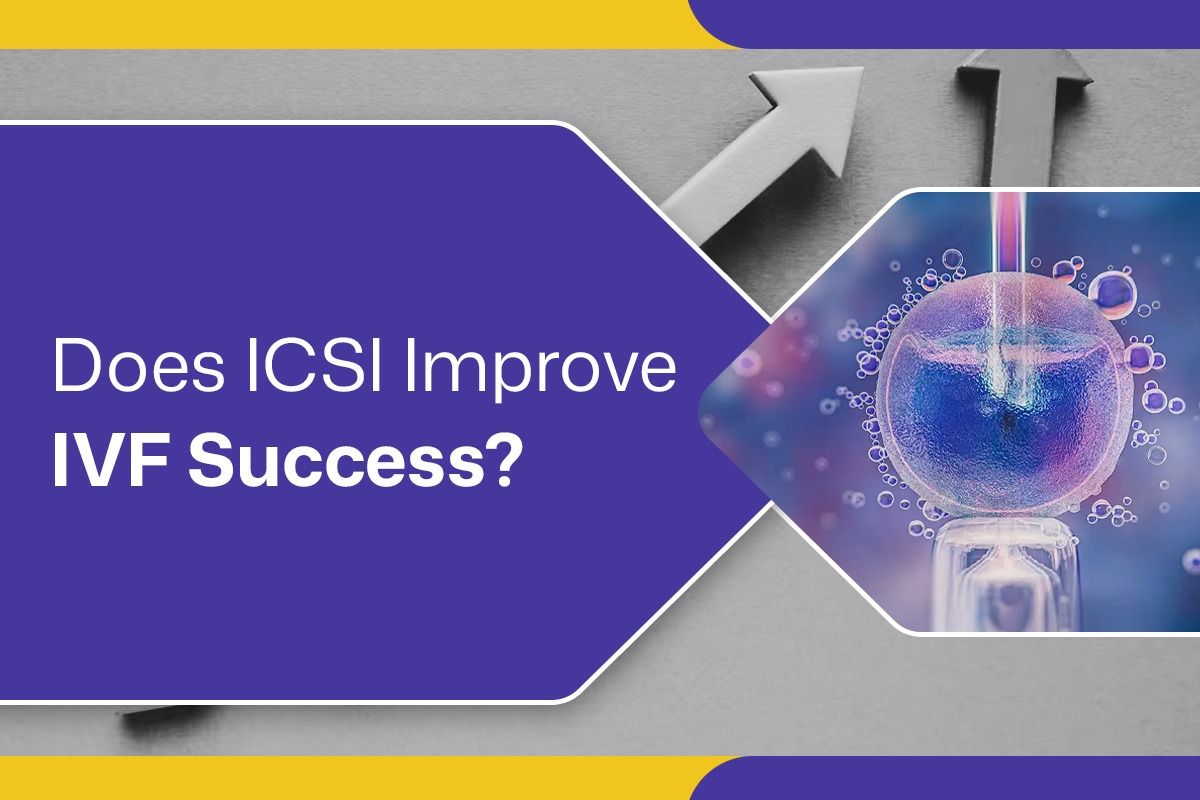
Intracytoplasmic Sperm Injection (ICSI) is an advanced form of IVF where a single, high-quality sperm is directly injected into a mature egg using a fine needle under a microscope. This micromanipulation technique is especially useful when sperm quality is compromised.
In conventional IVF, thousands of sperm are placed around each egg in a petri dish, and one naturally fertilizes it. ICSI bypasses this step, ensuring fertilisation even with very few or poor-quality sperm.
IVF with ICSI: Step-by-Step Process
The initial steps of IVF and ICSI are similar:
1. Ovarian Stimulation:
The woman receives hormonal medications to stimulate the ovaries to produce multiple mature eggs.
2. Egg and Sperm Retrieval:
Once the follicles are ready, the eggs are retrieved via a minor surgical procedure. The male partner provides a semen sample on the same day. If using frozen sperm or donor sperm, it is thawed at this stage.
3. Fertilisation (ICSI begins here):
A single sperm is selected and injected directly into each mature egg under a microscope. This improves the chances of fertilization, especially when sperm quantity or quality is poor.
4. Embryo Development:
After fertilization, embryos are monitored for 3–5 days. The best-quality embryos are chosen for transfer.
5. Embryo Transfer:
One or more embryos are transferred into the uterus under ultrasound guidance. Any remaining good-quality embryos can be frozen for future use.
ICSI vs. IVF: Which Should You Choose?
While both IVF and ICSI aim to achieve the same goal—successful fertilisation and pregnancy—ICSI offers significant advantages in specific cases. Most fertility specialists recommend ICSI in the following scenarios:
Male Factor Infertility:
- Low sperm count (Oligozoospermia)
- Poor sperm motility (Asthenozoospermia)
- Abnormal sperm shape (Teratozoospermia)
- Azoospermia (no sperm in semen)
– In such cases, sperm can be surgically retrieved via TESE (Testicular Sperm Extraction) or PESA/TESA. - Retrograde ejaculation (when semen enters the bladder)
- Anejaculation (inability to ejaculate)
The sperm retrieved surgically may be immotile or fewer in number, making ICSI the most effective method to achieve fertilization.
Other Situations Where ICSI Is Recommended:
- Failed fertilization in previous IVF cycles
- Using frozen sperm or frozen oocytes
- Preimplantation Genetic Testing (PGT) – to avoid contamination by multiple sperm
- HIV-discordant couples – where one partner is HIV-positive, reducing infection risk through sperm washing and ICSI
So, Does ICSI Improve IVF Success?
Yes—ICSI significantly improves fertilization rates, especially in couples dealing with male infertility or past IVF failures. While it doesn’t necessarily increase implantation or live birth rates in all cases, it ensures that fertilization happens, which is the crucial first step in a successful IVF cycle.
Your fertility specialist will assess your case and help decide if ICSI is the right option for you.
IVF vs. ICSI: Does ICSI Improve IVF Success?
You may have heard that ICSI (Intracytoplasmic Sperm Injection) can improve your IVF success rates, which is why many doctors recommend it. While clinical pregnancy rates with ICSI and IVF are often similar, the fertilisation rates are significantly higher with ICSI, especially in cases of male factor infertility.
In fact, ICSI has a fertilisation success rate of up to 85% and an embryo implantation rate of up to 60%, offering real hope to couples who face fertilisation challenges.
Risks of ICSI

As with any medical or surgical procedure, ICSI is associated with certain risks and potential disadvantages:
- Damage to the Egg
During sperm injection, there’s a small risk that the egg may be damaged in the process, making it non-viable. - Potential Genetic Abnormalities
ICSI may slightly increase the risk of birth defects or genetic issues. In extremely rare cases, it has been associated with intellectual disabilities. However, most of these risks are minimal with proper screening. - Risks Shared with IVF
ICSI shares common risks with conventional IVF, such as:- Multiple pregnancy, especially when more than one embryo is transferred
- Ovarian Hyperstimulation Syndrome (OHSS) due to hormonal stimulation
✅ Fortunately, these complications are rare, and with thorough screening and expert care, they can be effectively minimised.
At Bloom IVF, we use the latest advancements in fertility care to ensure a safe and effective ICSI experience, with an extremely low risk of complications.
IVF or ICSI: Which Is Better?
So, which one should you choose?
Both IVF and ICSI have their own strengths. Generally:
- ICSI is better suited for cases involving:
- Male factor infertility (low count, motility, or morphology)
- Previous IVF failures due to poor fertilisation
- Use of frozen sperm or eggs
- Preimplantation Genetic Testing (to avoid contamination by multiple sperm)
- IVF is ideal when sperm parameters are normal and fertilisation is expected to occur naturally in the lab.
If you’re unsure, a consultation with an experienced fertility specialist at Bloom IVF can help you make an informed decision tailored to your unique case.
Does ICSI Improve IVF Success?
Yes. With continuous technological advancements, ICSI outcomes have steadily improved. Today, ICSI benefits from innovations such as:
- Artificial Intelligence in sperm and embryo selection
- Time-lapse embryo monitoring
- Advanced micromanipulation tools
These enhancements make ICSI more precise and successful than ever before.
At Bloom IVF, we offer cutting-edge ICSI techniques and an infrastructure that matches international standards, providing cost-effective, high-quality fertility treatment in India.
Frequently Asked Questions
Is IVF more successful with ICSI?
Yes. ICSI typically results in higher fertilisation rates than conventional IVF, particularly in cases of male factor infertility. While overall pregnancy rates may be similar, ICSI ensures that fertilisation takes place when sperm quality is compromised.
Which is more costly—IVF or ICSI?
ICSI is more expensive than conventional IVF because it involves a specialised laboratory procedure where a single sperm is microscopically injected directly into the egg. This added step increases the cost of treatment.
Who is ICSI better for?
ICSI is particularly beneficial for individuals or couples dealing with:
Obstructive azoospermia (where sperm is surgically retrieved)
Low sperm count (oligozoospermia)
Poor sperm motility (asthenozoospermia)
Abnormal sperm morphology (teratozoospermia)
Can ICSI be chosen even if there’s no male factor infertility?
Yes. ICSI can be selected even in the absence of male factor issues, especially when:
You’re undergoing Preimplantation Genetic Testing (PGT)
There’s a need for maximum fertilisation efficiency
You’re using frozen eggs or sperm
However, if sperm parameters are normal, conventional IVF may offer comparable results at a lower cost.
Can ICSI be used with donor eggs or donor sperm?
Absolutely. ICSI is often used in cases involving donor eggs or donor sperm, particularly to:
Minimise the risk of fertilisation failure
The procedure remains the same; only the genetic source of the gametes differs.
Ensure optimal fertilisation