
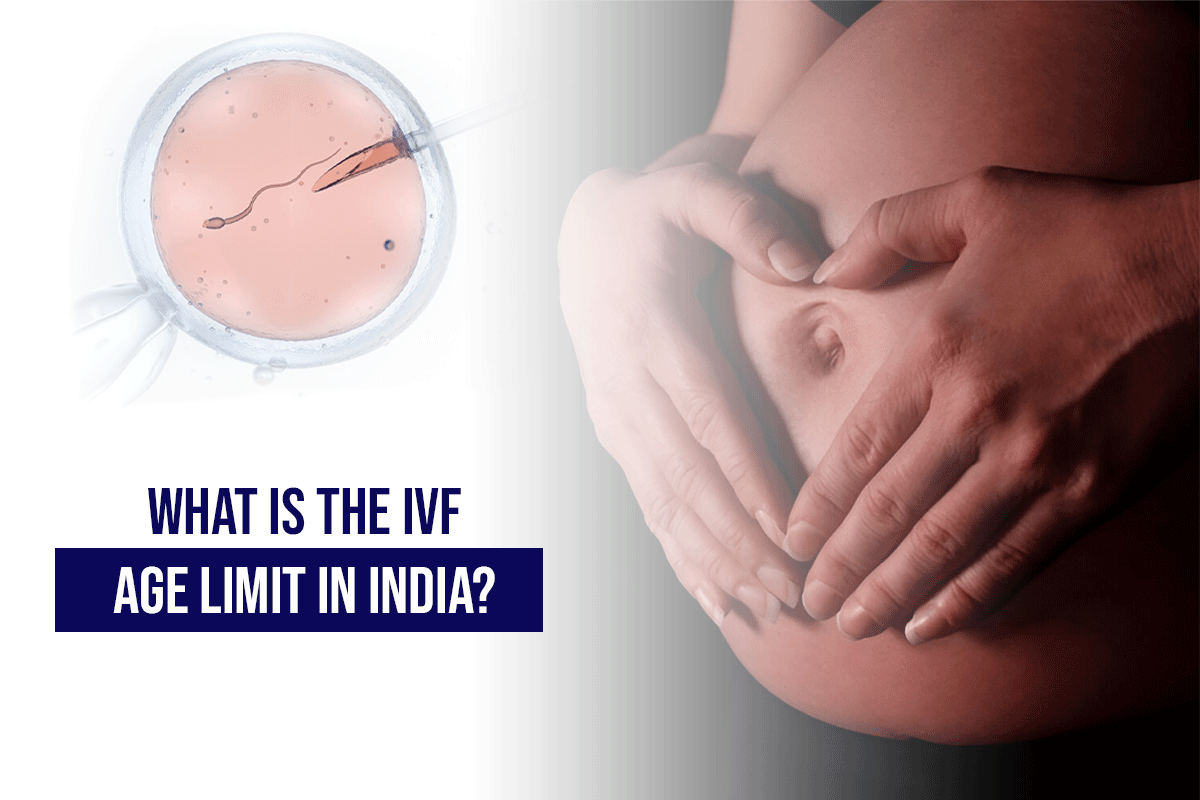
What Is IVF Age Limit In India?

In vitro fertilization (IVF) is one of the most successful interventions in Assisted Reproductive Technology (ART). It has made parenthood possible for thousands of couples who had nearly given up hope after struggling to conceive.
IVF involves fertilizing an egg with sperm outside the human body, in a controlled laboratory setting. The resulting embryo(s) are then transferred directly into the mother’s uterus.
While IVF helps reduce the pressure of the biological clock to a great extent, time remains a crucial factor in achieving a successful pregnancy. Before considering IVF, it’s important to understand the IVF age limit in India, which is influenced by both legal and biological considerations.
Let’s explore these age-related guidelines in more detail.
Age Limit For IVF In India
According to the Assisted Reproductive Technology (Regulation) Act, 2021, only:
- Men aged 21 to 55 years
- Women aged 21 to 50 years
Are eligible to avail of assisted reproductive services in India.
These age limits are enforced to ensure ethical practices and to safeguard the health and well-being of both the intended parents and the future child.
Minimum Age For IVF In India
The minimum age to undergo IVF in India is 21 years for both men and women. By this age, individuals are generally considered to be physically capable of reproduction and emotionally mature enough to take on the responsibilities of parenthood.
Maximum IVF Age Limit In India
As per the Assisted Reproductive Technology (Regulation) Act, 2021, the maximum age limit to undergo IVF treatment in India is 50 years for women and 55 years for men.
These limits are set to promote ethical practices and ensure the safety and well-being of both the parents and the future child.
IVF Success Rates By Age
The success of IVF is strongly influenced by the age of the woman undergoing treatment.
Here’s what the data shows:
- Women under 35 years have the highest success rates, with IVF success per cycle ranging between 50% to 60%. This is due to better egg quality and a higher likelihood of producing healthy embryos.
- Between the ages of 35 and 40, the success rate drops to around 25% to 40% per cycle, as egg quality and quantity begin to decline.
- After age 40, IVF success rates decline further, but pregnancy is still possible, especially with individualized treatment approaches

Is IVF Possible After Menopause?
This question is especially relevant for women who experience menopause earlier than expected. Menopause marks the end of a woman’s natural reproductive years, typically occurring between the ages of 45 and 55. It is diagnosed after the absence of menstrual periods for 12 consecutive months.
Women are born with a finite number of eggs, and both the quantity and quality decline with age. By the time menopause occurs, ovulation ceases, and natural fertility is lost.
This makes natural conception highly unlikely, but IVF offers hope even after menopause. With the use of either previously frozen eggs or donor eggs, many postmenopausal women can still achieve conception and have a successful pregnancy, provided their overall health permits it.
IVF And Age: What Is The Correlation?
The age of the parents, especially the mother, has a significant impact on fertility outcomes. Here are some key ways in which age affects IVF success:
1. Ovarian Reserve
A woman’s egg reserve naturally declines with age. Egg quality is crucial for forming a healthy embryo, and poor-quality eggs are more likely to result in chromosomal abnormalities.
Advanced technologies like Preimplantation Genetic Testing (PGT) can help identify and transfer only chromosomally normal (viable) embryos, improving the chances of success.
By the time a woman reaches menopause, the ovaries stop releasing eggs altogether. In such cases, IVF is possible only through previously frozen eggs or donor eggs.
2. Endometrial Receptivity
Endometrial receptivity refers to the uterus’s ability to allow the embryo to implant. With advancing age, the receptivity of the endometrium may decline, leading to a higher risk of implantation failure.
3. Sperm Health
While paternal age is not as critical as maternal age, it still plays a role. Men continue to produce sperm throughout life, but sperm quality—including motility, morphology, and DNA integrity—tends to decline with age, which can affect fertilization and embryo quality.
Advanced techniques like IMSI (Intracytoplasmic Morphologically Selected Sperm Injection) can help select the best quality sperm, improving IVF outcomes in older men.
4. Health Risks
Advanced maternal age increases the risk of several pregnancy-related complications, including:
- Gestational diabetes
- Hypertension/preeclampsia
- Chromosomal abnormalities (e.g., Down syndrome)
- Placenta previa
- Higher likelihood of C-section deliveries
Post Menopausal IVF at Bloom IVF
Understanding the legal aspects of assisted reproductive technology—especially the IVF age limit—is crucial for anyone exploring this treatment option. At Bloom IVF, our expert fertility specialists bring years of experience and clinical excellence, even in the most complex cases.
While it’s true that achieving pregnancy becomes more difficult with age, modern medical advancements offer renewed hope. Today, couples in their 40s and beyond can still realize their dream of parenthood through IVF.
Bloom IVF is a leading name in fertility care, often the answer to your search for the “best infertility center near me.” With three state-of-the-art clinics in Mumbai and over 35,000 successful ART births, we’re dedicated to ensuring that age is never a barrier to your parenthood journey.
Whether you’re in your 30s, 40s, or beyond, we are here to provide world-class infrastructure, compassionate care, and personalized IVF solutions. Let us walk with you, hand in hand, towards a successful and healthy pregnancy.
Frequently Asked Questions
What is the youngest age for IVF?
According to the Assisted Reproductive Technology (Regulation) Act, 2021, the minimum age for both men and women to undergo IVF in India is 21 years.
What age is suitable for IVF?
Most fertility specialists consider the late 20s to early 30s as the ideal age for IVF, as this age range typically offers better egg quality, higher success rates, and fewer complications.
Till what age can IVF be done?
As per the ART Act, the maximum age for women to undergo IVF is 50 years, and for men, it is 55 years.
Is 38 too old to have a baby?
While fertility declines after age 35, 38 is not too old to conceive. Thanks to advancements in genetic testing, egg/sperm freezing, and embryo selection, many women in their late 30s successfully achieve pregnancy through IVF.