
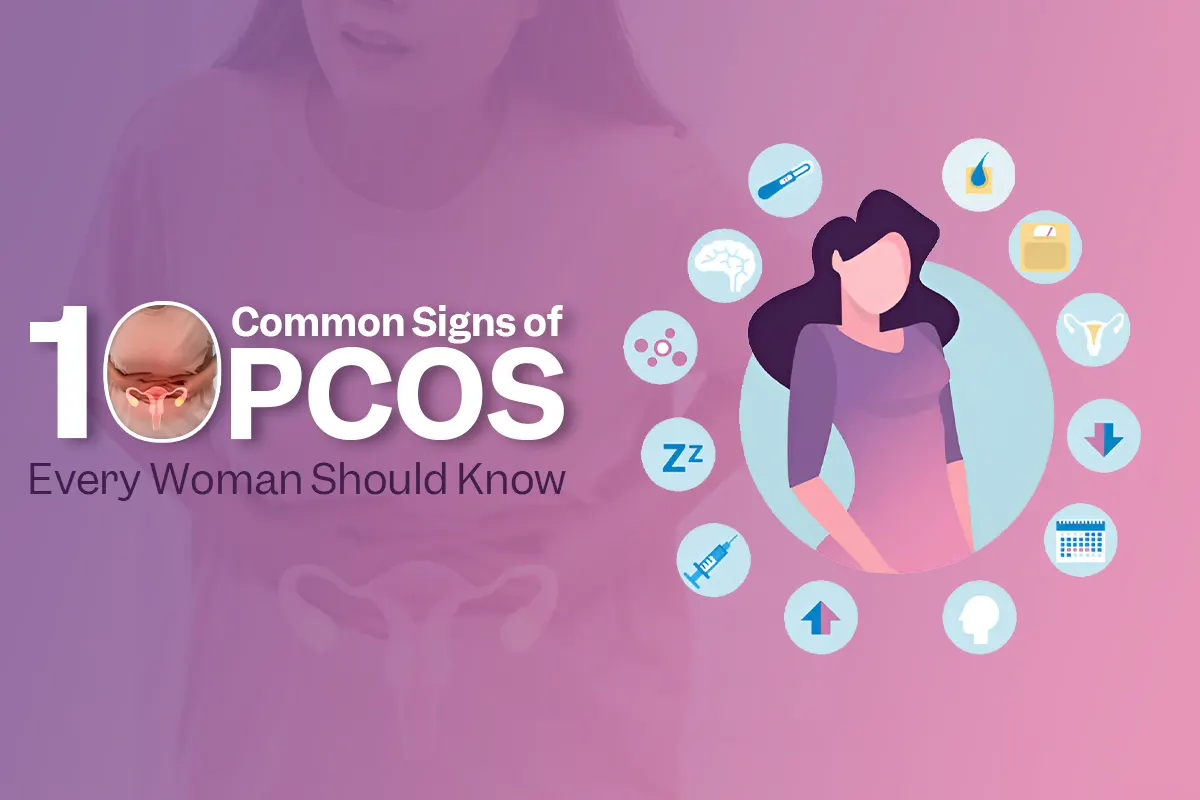
10 Common Signs of PCOS Every Woman Should Know

Despite PCOS affecting 1 in 10 women worldwide, many aren’t aware of how this endocrine disorder manifests. Polycystic ovarian syndrome affects more than your fertility; it has a profound impact on physical and mental health too. Do you think you or someone you know has PCOS? Here are 10 common signs of PCOS that every woman should know.
What is Polycystic Ovary Syndrome?
In PCOS, or Polycystic Ovarian Syndrome, a woman’s body produces excess androgens or male hormones. This disrupts the delicate hormonal balance of estrogen, progesterone, and testosterone in the body. As a result, biological functions like ovulation are impaired.
You may no longer release an egg every month and ovulate regularly. Since PCOS interrupts regular ovulation, it also hinders the functioning of your menstrual cycle. Sometimes, the eggs that aren’t being released during ovulation become enlarged with fluid and develop into follicles, which are fluid-filled sacs or cysts.
The Top 10 Common Signs of PCOS
PCOS is more common than we realize, since, according to the PCOS foundation, more than half the women with PCOS aren’t aware that they have it.
Some women might face menstrual issues, some may experience difficulty conceiving, and some women may experience both issues due to PCOS. Some women may experience symptoms from the time they begin menstruating, while others may notice symptoms later in life.
Remember, not every woman with PCOS will experience every sign and symptom mentioned here. Many of these symptoms and signs are a direct result of elevated levels of male hormones (androgens) and insulin resistance, which are both caused by PCOS. The effects of each symptom can range from mild to severe.
1. Irregular Periods
Missed or highly irregular periods are one of the most common polycystic ovarian syndrome symptoms in women. You may experience missed periods, unusually long periods, or irregular cycle lengths that vary from month to month.
Irregular periods (oligomenorrhea) can signal a problem with regular ovulation. If your cycle is greater than 35 days, we advise consulting a gynecologist. Hormonal birth control like the pill may be prescribed to help regulate it.
2. Excessive Hair Growth
Excessive hair growth or hirsutism is a condition in which women experience the growth of dark, coarse hair in unwanted places. These include the face (upper lip, chin, cheeks), arms, breasts, back, thighs, and lower belly. The extent of hair growth may also be affected by your genetics and ethnicity.
Hirsutism is one of the most common signs of PCOS. Doctors use the Ferriman-Gallwey scoring system to evaluate and quantify hirsutism in women.
Again, lifestyle changes can reduce the severity of this symptom. Your doctor may recommend at-home solutions to lessen the thickness and growth of your hair.
Many women with intense hirsutism due to PCOS or thyroid issues will wax or shave their excessive facial and body hair as a temporary solution. You can also try more permanent methods of hair removal, such as laser hair removal and electrolysis.
3. Hair Loss
Along with unwanted hair growth, PCOS can also cause unwanted hair loss. Male pattern baldness can be one of the surest signs of PCOS, as it is caused by androgens.
You may experience baldness in a similar pattern to men do, or notice that the hair all over your head is thinner than it used to be.
4. Weight Gain
Gaining weight is one of the main symptoms associated with PCOS.
Women with PCOS may often have insulin resistance, which means that although insulin is available in the body, the cells in the body are resistant to its effects. Insulin is responsible for regulating blood glucose levels and also converting fat to energy.
This means that patients with PCOS find it difficult to lose weight and can gain weight very easily, even if they’re not eating more or exercising less. Being overweight can worsen the symptoms of PCOS, which is why doctors may recommend making lifestyle changes to manage weight more effectively. These include exercising regularly and eating a low-carb, high-protein diet.
Studies show that a significant proportion of women with PCOS (between 38% and 88%) are either overweight or obese. However, this statistic shows that women who are thin can also have PCOS.
5. Acne
Oily skin and persistent acne are common signs of PCOS. If you’re struggling with acne that doesn’t respond to usual treatments, it might be a sign of a hormonal imbalance.
Acne caused by PCOS can be very difficult to treat with skincare products, antibiotics, or topical ointments. Doctors often recommend taking hormonal medication, which lowers the levels of androgens in the body and reduces or gets rid of acne.
Making lifestyle changes like adopting a better diet, taking supplements, and medicating can help get rid of acne caused by PCOS.
6. Ovarian Cysts
Although the condition is called polycystic ovarian syndrome, these ‘cysts’ are actually immature follicles (fluid-filled sacs) that haven’t released eggs. They build up in the ovaries, prevent ovulation, and are usually detectable by ultrasound.
7. Infertility
PCOS is one of the leading causes of infertility in women: almost 1 in 5 infertile women has PCOS, according to the U.S. Office of Women’s Health.
PCOS causes infertility because the body’s excess androgen levels disrupt regular ovulation and can even prevent it from happening altogether. If a woman doesn’t ovulate, she will not be able to conceive naturally, even if her menstrual cycle is regular.
Fertility clinics like Bloom IVF help women with PCOS conceive by prescribing them medication or contraception to regulate their menstrual cycle. If these don’t work, treatments like in vitro fertilization are worth considering.
8. Fatigue
PCOS can cause fatigue and tiredness. Women with PCOS have an increased risk of sleep apnea, which is a condition that results in disturbed breathing at night. These women may sleep for an ideal amount of time and yet wake up feeling fatigued and not well-rested.
This feeling of fatigue may also contribute to increased mood swings and an inability to concentrate.
9. Patches of Dark Skin
Medically referred to as acanthosis nigricans, dark velvety patches of skin on the neck, armpit, groin region, and under the breasts are a common indicator of PCOS. These patches are more common in women who are at risk for type 2 diabetes and in women of color, including Indian women.
These dark patches are caused mainly by increased insulin levels or obesity. They are not harmful but can look aesthetically unpleasant and potentially cause self-esteem issues. Since acanthosis nigricans is caused by insulin resistance, restoring the body’s hormonal balance can help clear this skin condition.
10. Skin Tags

Skin tags, one of the less common signs of PCOS, are small bumps or flaps of skin. They are mostly found on the neck and in the armpits. These tags may sometimes appear alongside the acanthosis nigricans.
Skin tags are often a direct result of insulin resistance, but they can also form due to other reasons and aren’t exclusive to women with PCOS. Skin tags can be removed by a doctor, or they can sometimes fall off on their own.
Risks in Later Life
If left untreated, PCOS can cause certain health complications like type 2 diabetes, high blood pressure, increased risk of heart disease, and sleep apnea.
PCOS is also associated with mental health issues like mood swings, anxiety, and depression. These are attributed to the effect PCOS symptoms can have on a woman’s self esteem confidence, and quality of life.
Women whose periods are extremely irregular may be at higher risk of developing endometrial cancer. Speak to your fertility specialist to get PCOS treatment that helps minimize your risk of cancer. PCOS is also associated with type 2 diabetes and high cholesterol, which puts you at an increased risk of heart disease and stroke.
Diagnostic Criteria
How is PCOS diagnosed? There are three main characteristics of polycystic ovarian syndrome:
- Irregular periods
- High levels of male hormones (androgens)
- Polycystic ovaries
You must have at least two of these symptoms to receive a PCOS diagnosis.
PCOS Treatment Options
PCOS has no permanent cure. It can be treated through a comprehensive treatment plan that instead aims to target every symptom and sign of PCOS instead. Women who are overweight may need to lose weight to reduce the severity of PCOS symptoms.
Birth control pills are the most preferred treatment option, as they help regulate the hormonal imbalance caused by excess androgens, which reduces the effects of most PCOS symptoms. Certain medicines used to treat diabetes, such as metformin, may also be recommended to make your cells respond to insulin again.
Doctors may prescribe anti-androgens like spironolactone to treat hirsutism and hair loss. For women trying to conceive, letrozole or clomiphene can stimulate ovulation.
At Bloom IVF, we always put patients first. We have decades of experience in providing comprehensive and effective PCOS treatment to women of all ages.
Lifestyle Changes To Control PCOS
Smart lifestyle changes can help you manage the effects of PCOS. Even losing 5 to 10% of your body’s weight can improve your PCOS symptoms to a great extent.
A balanced low-carb diet with lots of fiber and protein can help regulate your blood sugar effectively. Cutting down on processed foods and exercising regularly can help you manage your weight more effectively and boost your body’s insulin sensitivity.
If you’re looking for PCOS treatment with high success rates, look no further than Bloom IVF. We offer advanced medical treatments and personalized care to women with PCOS to help them conceive.
Frequently Asked Questions:
What is PCOS?
PCOS, or polycystic ovarian syndrome, is an endocrine disorder that disrupts a woman’s regular ovulation and menstruation.
Is PCOS curable?
PCOS cannot be completely cured, but it can be effectively managed. With the right combination of medication, lifestyle changes, and a personalized treatment plan, symptoms can be controlled, and long‑term health risks reduced.
Can women with PCOS become pregnant?
Yes, women with PCOS can definitely become pregnant, especially if they receive the right care and treatment.
How is PCOS diagnosed?
PCOS can be challenging to diagnose. Doctors typically evaluate your medical history, perform blood tests to check hormone levels, and use ultrasound imaging to assess the ovaries.
Is not having regular periods a bad thing?
Not having regular periods is not good for your health, as the endometrial lining keeps building up over time. This increases your risk of endometrial cancer. Speak to your gynecologist about inducing a period through medication.