


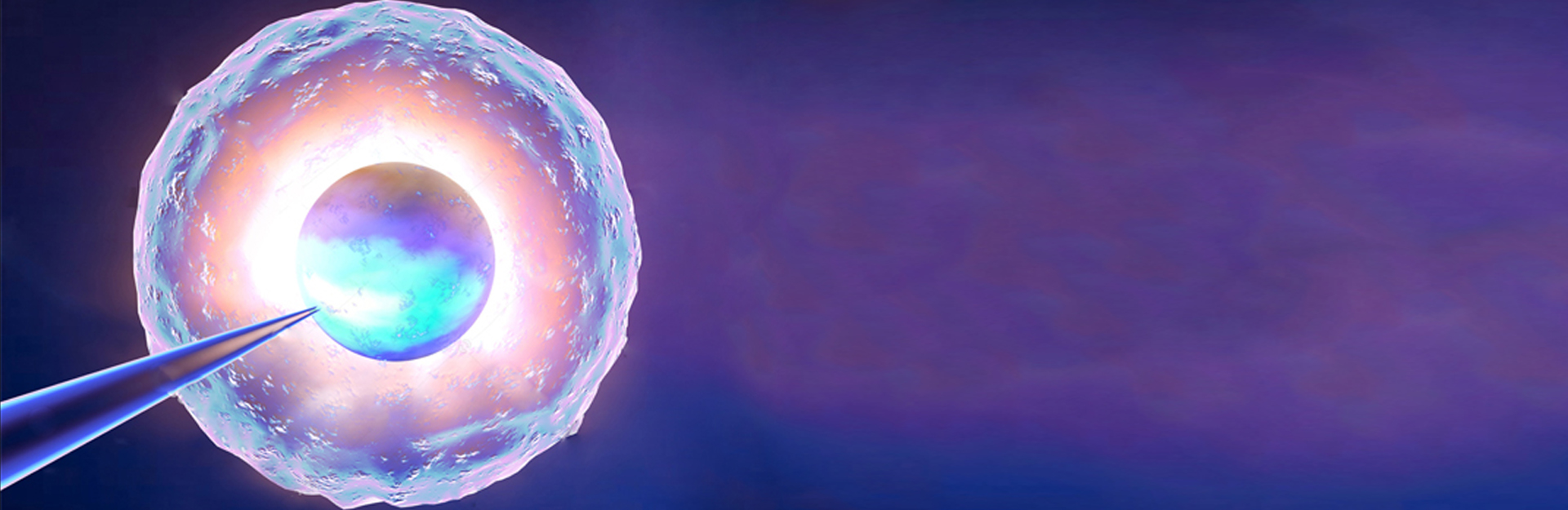
Couples may face difficulty and frustration after IVF and ICSI treatments due to failure of successful implantation of healthy looking embryos into the womb. In general, the embryos are transferred back into the womb on the second or third day, when they are in the 4 cell or 8 cell stage.
Once they are placed back into the womb, they keep on growing till day 5 (5 days after oocyte retrieval). At this time the embryos are multicellular, and differentiated into an inner cell mass and an outer cover called the Trophectoderm. This embryo is called a Blastocyst.
The Blastocyst starts expanding and cracks open the cover of the zona, and escapes out. This process is known as 'Hatching'. day 1) In Assisted Hatching, a cut is given to the zona, when the embryos are at 4 cell (day 2) or 6-8 cell (day 3) stage. These embryos are placed back into the womb. The cut also called Assisted Hatching, weakens the zona, and helps in the hatching process. This in turn results in better pregnancy rates.
1. Mechanical Hatching: In this the embryo cover is slit open mechanically with the help of a thin long drawn out glass needle. This is done with the help of a machine called the Micromanipulator.
2. Chemical Hatching: In this the zona is opened by touching it with a chemical called Acid Tyrode Solution. This is also done with the aid of the Micromanipulator.
3. Laser Hatching: This is the latest method, introduced in the world in 1992. At present the Laser beam is generated by an InGaSp Diode Laser. The zona is cut with the Laser beam by simply pressing a button on the Laser machine. Many babies have been born all over the world, following the introduction of this technique.
Bloom Fertility Centre was the first unit in India to start this technique in 1999. We have already completed more than 300 cycles, with success rates as high as 30%.
This message will be confidential